Try Warm Room Colors Before You Commit to Paint
 By Laura Jordana · Editor
Published Oct 17, 2026 · 4 min read
In this guide
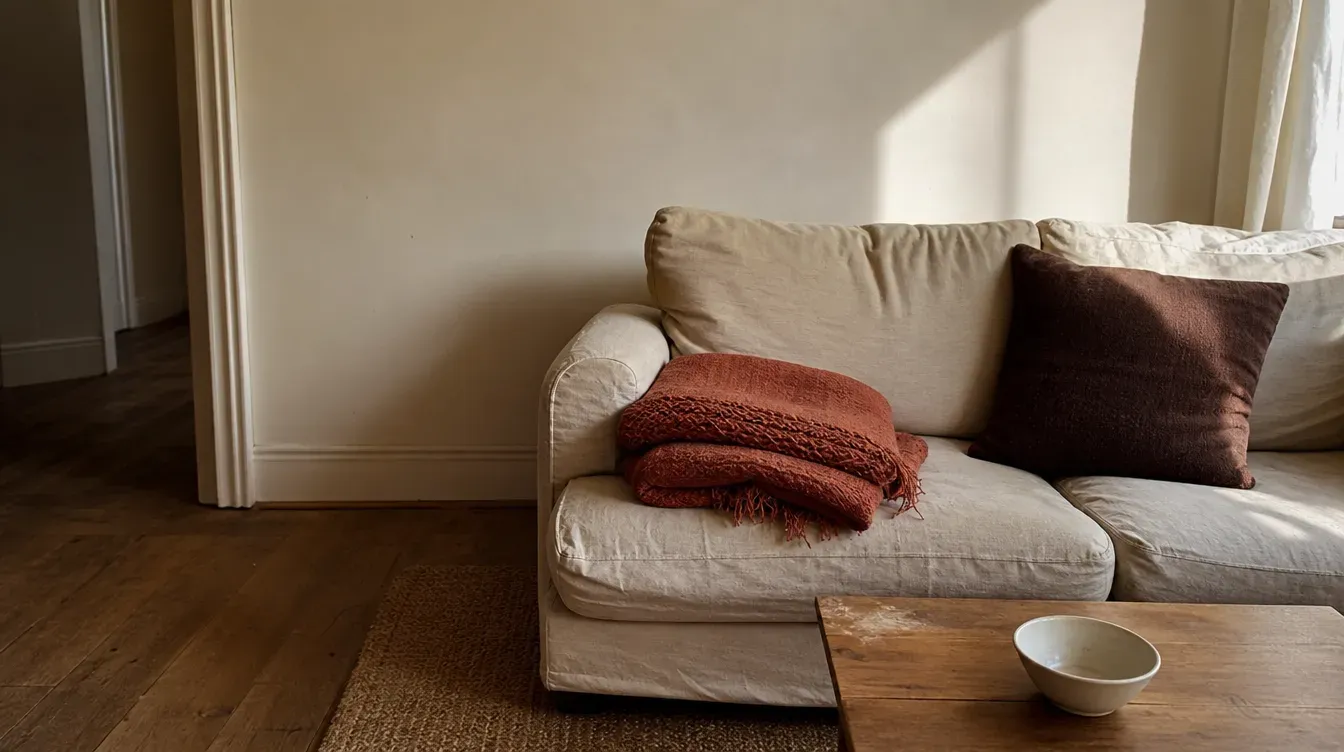
A rust throw on your sofa is easier to remove than rust paint on four walls. Start with a movable color you already own, then decide whether you like it beside your floors and furniture. The comparison below is an editorial exercise, not a room makeover we have tested.
Treat search interest as a starting point
Houzz’s 2026 U.S. Emerging Summer Trends Report recorded increased searches for rust and chocolate brown, alongside mushroom and sage. Its comparison is specific: searches on the US Houzz platform in January–March 2026 versus January–March 2025.
That does not tell us how many households painted a room, bought a sofa or kept a color after trying it. It is not a representative consumer survey, and it supplies no Canadian trend data. Use the report as a reason to consider a color, not a reason to replace furniture.
Our proposed approach is the same for readers in the US and Canada: compare existing objects before spending. It gives you a personal preference check, not a measured saving or a promise that the room will photograph better.
Choose one place you actually see
Pick the view from your usual seat, not the corner that looks best in a listing photo. Identify what you cannot or do not want to change: flooring, a large sofa, cabinetry or a landlord’s wall color.
Clear just enough small clutter to see those surfaces. Keep the room functional. A tray full of daily items does not need to disappear permanently to make a color scheme possible.
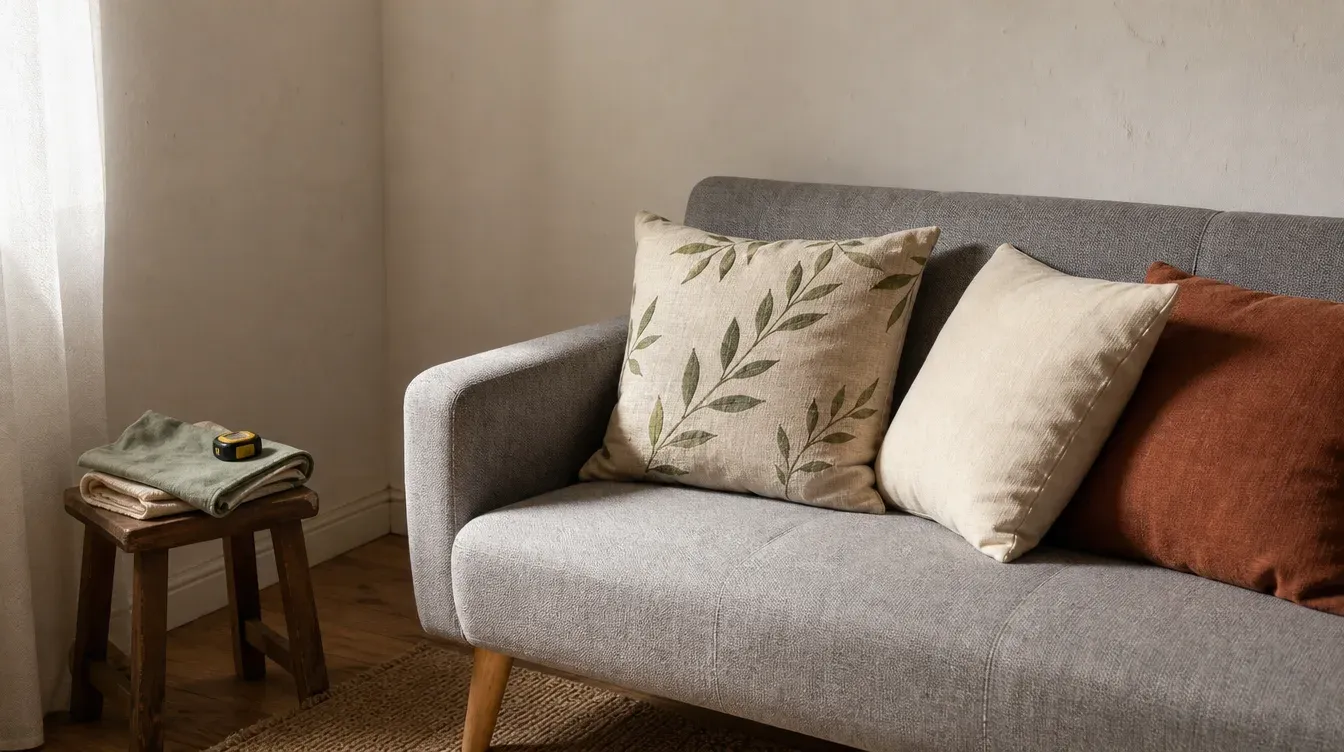
Choose one candidate from things you already own. A brown cushion from the bedroom, a rust blanket or a plain ceramic object can be enough. Put other candidates aside so you compare one change at a time. Do not drape clothing over a lamp or heater to simulate a color patch.
Compare accents without buying a set
Match the size of the trial to the decision. A small bowl can help you judge whether you enjoy a color nearby, but it cannot show the effect of painting a whole wall. A larger throw provides more visible color without becoming a paint prediction.
| Existing item | Place to compare it | What to watch |
|---|---|---|
| Rust throw | Folded on the sofa | Relationship to upholstery and floor color |
| Brown cushion | On your usual chair | Visibility against the chair fabric |
| Warm-toned ceramic object | On a stable side table | Whether a small accent is enough |
| Neutral cover | Beside the candidate, if already owned | Whether you prefer the original quieter mix |
Keep fragile objects away from table edges and within the furniture’s load limits. Do not add a throw where it can obstruct a walkway, vent or heater. Follow the heater manufacturer’s clearance instructions rather than guessing a safe distance.
If the accent looks wrong, move it back. That result is useful: you have ruled out one combination without turning it into a shopping list.
Look in daylight and in your normal evening light
Check the same arrangement during daylight and again with the lights you normally use after dark. Benjamin Moore’s paint-sampling guidance recommends evaluating color under both natural and artificial light. Applying that observation routine to textiles is our editorial suggestion, not a claim that fabric behaves like paint.
Write down plain observations: brown cushion disappears into chair; rust looks good beside wood; current neutral feels calmer. Avoid a score that pretends to measure design quality. A phone photo can serve as a reminder, but your screen and camera processing are not a reliable paint-color reference.
Look from the doorway as well as your seat. Keep lamps and switches accessible. If liking the arrangement depends on blocking a light source or hiding everyday belongings somewhere inconvenient, change the arrangement before adding anything else.
Separate a color trial from a painting project
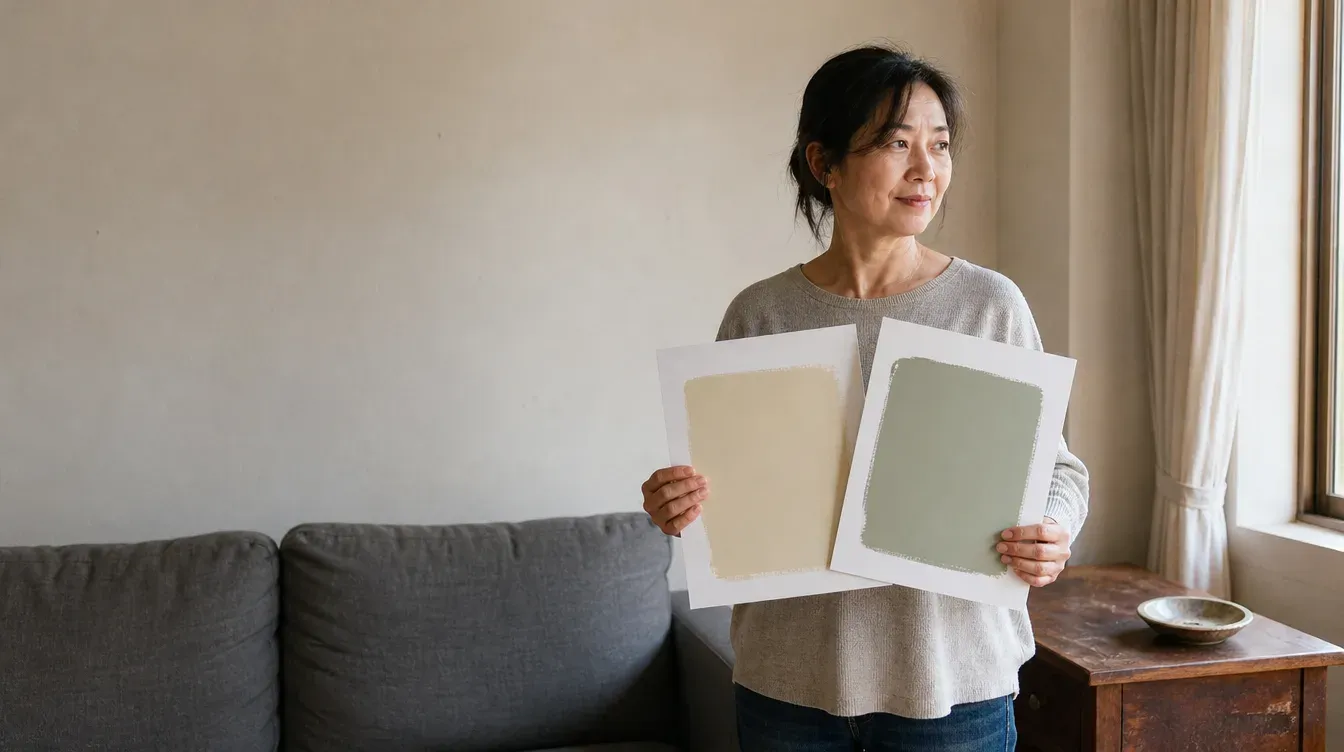
If you still want painted walls, switch to actual paint samples. Benjamin Moore suggests movable white boards; these let you compare a sample in different areas without painting patches directly onto the wall.
For its liquid samples, the manufacturer calls for at least two coats. Those samples have an eggshell sheen and are not durable finish coatings. These details are specific to its products, not instructions for every brand. Follow the label for application, drying and ventilation, and keep wet samples and supplies away from children and pets.
Do not assume a sample board looks identical to the final coating, sheen or wall surface. Keep product details with the sample so you can ask the paint seller about differences before buying a finish.
Renters should check their lease and obtain any required written permission before painting or attaching anything to walls. A removable product does not guarantee a damage-free wall. Start with rental decorating constraints if the room needs changes beyond loose textiles.
Stop at the smallest change you like
Put the room back into everyday use before deciding. Sit with a drink, reach for the remote and move through the normal walking route. Check that washable covers still fit and that any borrowed textile can return to its original job.
If one cushion gives you enough color, stop there. If none of your existing objects offers a useful comparison, leave the decision open rather than buying a coordinated set to justify it. Note the exact item or sample you would need to evaluate next, then keep that separate from a purchase commitment.
Sources checked October 15, 2026: Houzz, 2026 U.S. Emerging Summer Trends Report; Benjamin Moore, Tips on How to Sample Paint Colors.
Frequently asked questions
Does the Houzz report prove that warm colors are in most homes?
No. It compares searches on US Houzz in January–March 2026 with January–March 2025. Search interest is not sales or adoption, and the report does not describe Canada.
Do I need new cushions for this exercise?
No. Start with an existing throw, cushion cover or movable object. If you have nothing suitable, pause rather than buy a matching set just to run the exercise.
Can a throw tell me exactly how a paint color will look?
No. Fabric offers a rough color comparison, not a paint match. Check the actual paint sample in your room before choosing a wall color.
Can I paint a rented room after trying samples?
A sample test does not give you permission to alter a rental. Check your lease and obtain any required written permission before painting or attaching materials to walls.