Mix Botanical Cushions Without Buying a Matching Set
 By Laura Jordana · Editor
Published Oct 25, 2026 · 4 min read
In this guide
A matching cushion set can leave you paying for sizes you do not need and patterns you would not choose separately. Start with the inserts and covers already in your home, then compare one botanical print with the plain fabrics you own. You may need a different arrangement rather than another cushion.
Count the cushions you actually use
Clear the sofa and put back only the cushions that help you sit comfortably. Keep the place where you rest your arm and the spot where someone else sits usable. A photo-ready pile is not useful if it goes on the floor every evening.
Gather spare covers from other rooms and check their labels and condition. A plain cushion from the bedroom might be the missing partner for a leafy print. This first pass requires no purchase, and it does not alter rental walls or furniture.
Before shopping, note which problem remains: a worn cover, an uncomfortable insert or a color combination you do not like. Those are different problems. Buying another decorative cover will not make a flattened or unsuitable insert more comfortable.
Measure the inserts before choosing covers
Measure each insert’s width and height without squashing it, and note its shape. Record any size information on the label too. Check the dimensions of a cover that currently fits, but distinguish flat cover measurements from insert measurements in your notes.
Compare your notes with the maker’s sizing guidance for a replacement cover. Do not assume all square cushions use the same dimensions or that a universal rule about sizing down will suit every filling. If the listing leaves the fit unclear, ask the seller or skip it.
Inspect the opening as well as the size. A narrow or damaged zipper can make an otherwise suitable cover impractical. When testing an owned cover, stop if insertion requires force or strains the seams; a tight-looking cushion is not worth breaking a closure.
Borrow a pattern idea, not a trend claim
The V&A’s article on William Morris’s wallpaper describes a historical body of work using stylized plants and repeated designs, with differences in complexity and density. It provides a way to look closely at pattern. It does not establish that botanical cushions are popular now.
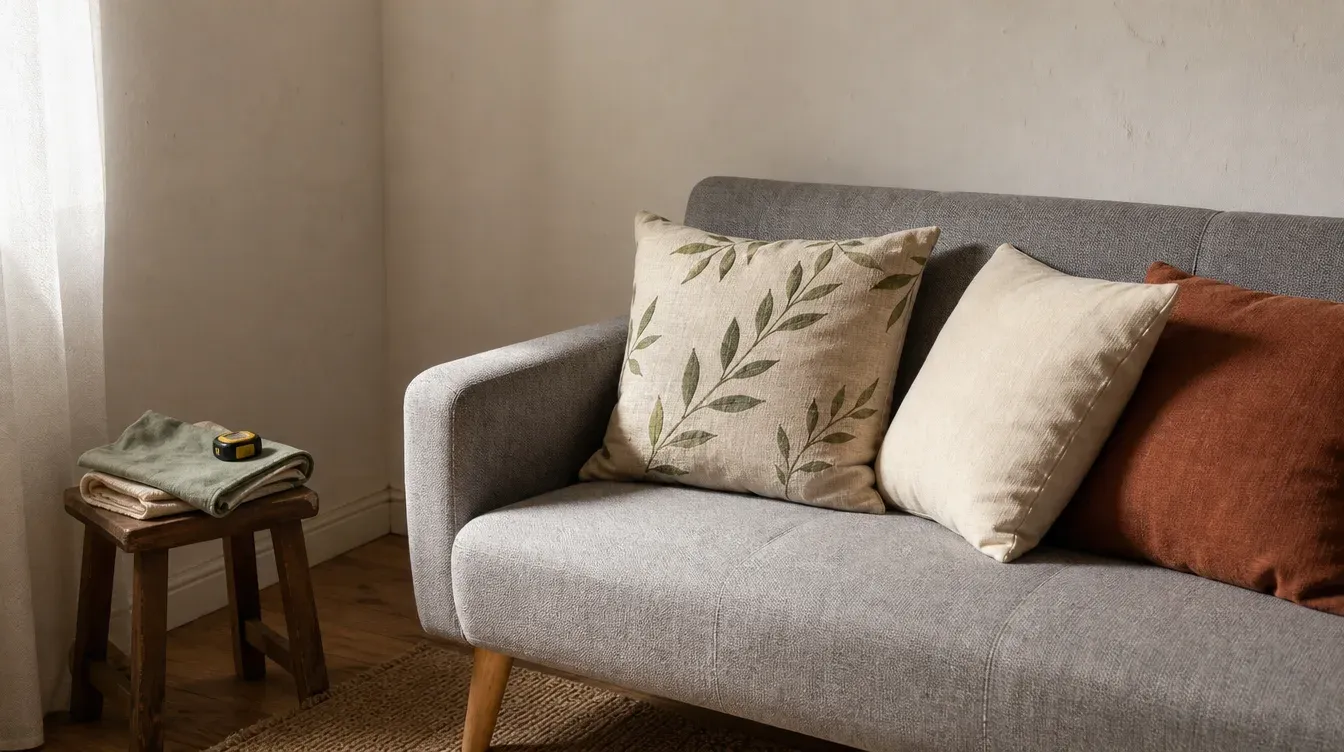
Applying wallpaper principles to cushions is our suggestion. Look at the size of the leaves, how much background shows between them and how often the shapes repeat. These features make two green prints look quite different even when their colors are similar.
You do not need a reproduction of a museum pattern. Work with an existing generic leaf, stem or flower design. An open print with visible background may give you the quieter effect you want; a dense print may suit you better. Neither is a rule about the size or quality of your room.
Build a mix with separate jobs
Start with one pattern you like and assign the other covers a simpler role. This is a proposed comparison, not a set we tested or a formula that everyone needs to follow.
| Role | Owned item to try | Comparison to make |
|---|---|---|
| Main pattern | Leaf or flower cushion | Notice motif size and visible background |
| Quiet companion | Plain cover in a color from the print | Check whether the colors feel connected |
| Optional contrast | Another plain cover or a different-scale print | Remove it if the group feels crowded |
Try the main pattern and quiet companion first. View them from the doorway, then sit where you normally watch television or read. A small leaf that looks detailed close up may read mainly as a patch of color from across the room.
Add the optional contrast only if you want it and have seating space. If two patterns compete, remove one before looking for a third to mediate. Repeating a background color is an option, not an instruction to buy an exact-match set.
Let care requirements decide what stays
A cushion used every day needs a care routine you can follow. Read the cover and insert instructions separately; a removable cover does not mean the filling can go through the same wash. Keep trims, closures and any fabric additions in that decision.
NMSU Extension advises considering weight, texture and care compatibility when adding fabric to reused clothing. We are applying that compatibility check to a possible cushion project, not treating its guide as a cushion-making pattern. A garment scrap that looks good may be too small, worn or difficult to care for.
If sewing is outside your skills, keep the project to rearranging existing finished covers. Do not cut a usable garment before checking that the sound fabric can accommodate the complete cover and closure. If a project needs needles or an iron, follow equipment instructions and keep sharp tools and hot surfaces away from children and pets.
Make a purchase list only after the room check
Leave your proposed mix in its normal place and use the seat. Check whether you keep removing a cushion, whether a seam scratches or whether the arrangement blocks access to storage. Keep textiles clear of heaters according to the heater manufacturer’s instructions, rather than guessing at a clearance distance.
For renters, a cushion change avoids holes and paint, but it is not a reason to replace furniture that already works. Our renter-friendly decor guide covers other projects; check permissions separately before making any alteration.
If one cover is still missing, write down its required dimensions, care method and intended role. No US or Canadian prices were verified for this plan. Check the local total and return terms, and buy a single suitable cover rather than a bundle of extras you have already decided not to use.
Sources checked October 15, 2026: V&A, William Morris and wallpaper design; NMSU Extension, Rags to Riches: Recycling and Upcycling Old Clothes.
Frequently asked questions
Do botanical cushions have to match?
No. Our suggested mix repeats a color while varying the amount of pattern. Matching sets are optional, and a single patterned cushion with an owned plain cover may be enough.
How do I check whether a cover fits my insert?
Measure the insert's width and height without compressing it and record its shape. Compare those measurements with the cover maker's sizing guidance rather than assuming every square cover fits.
Does the museum source prove botanical cushions are trending?
No. The V&A article concerns William Morris's historical wallpaper designs. Applying its pattern concepts to cushions is our styling suggestion, not evidence of current popularity.
Can I make a cover from an old garment?
Possibly, if the usable fabric, condition, size and care requirements suit the project. NMSU's textile-reuse guidance supports checking compatibility, but it is not a complete cushion-cover sewing tutorial.