Compare Paint Samples Before You Commit to a Wall
 By Laura Jordana · Editor
Published Oct 29, 2026 · 5 min read
In this guide
A small paint chip can narrow your choices, but it does not show how a color will sit beside your sofa through a whole day. Compare movable samples in the room before committing to wall paint. Keep the sample product, the eventual finish and the light you use separate in your notes so you know what you are actually judging.
Shortlist colors without buying a pile of samples
Start with swatches and materials you already have: your curtain fabric, a cushion cover, a flooring offcut or a clearly labeled paint chip. Choose a small group of plausible colors rather than every shade that looks appealing online. A screen is useful for organizing ideas, not for settling the room’s exact color.
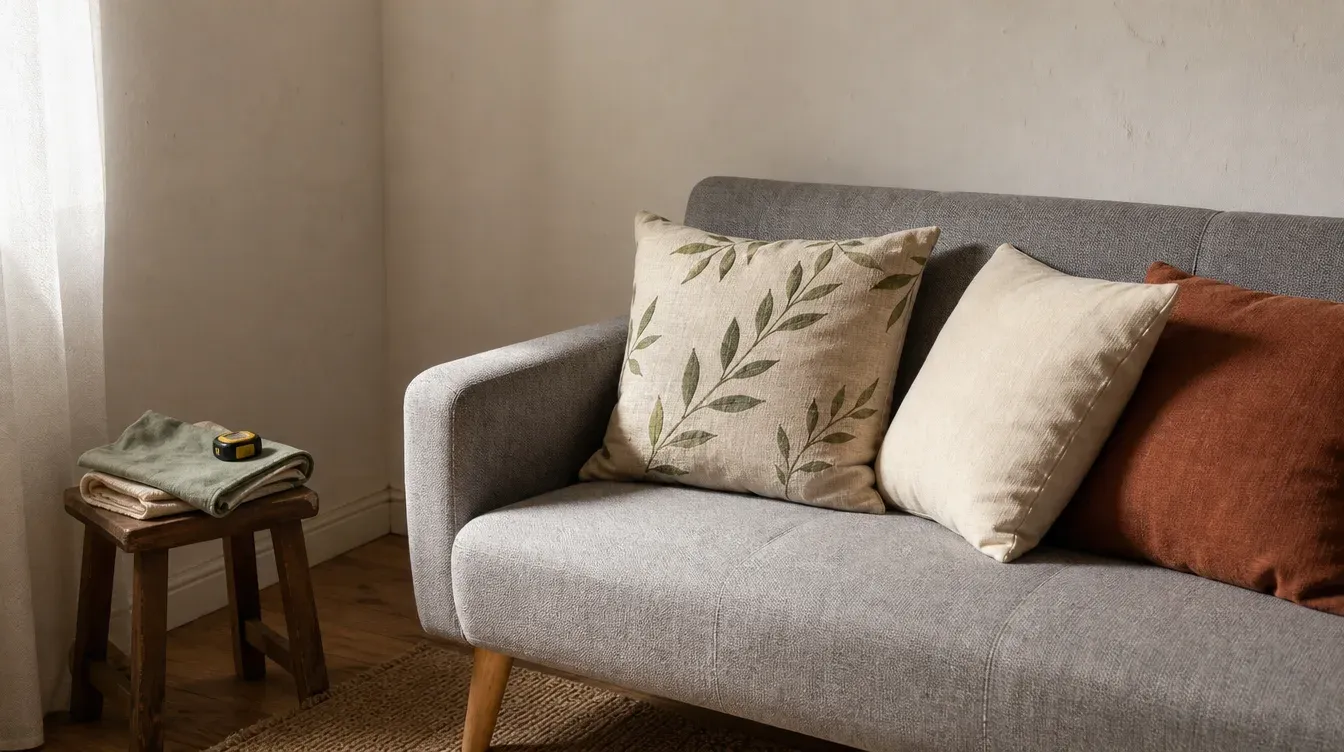
Look at the fixed elements first. Flooring, a countertop or a large sofa may remain long after the paint changes. Place your existing swatches beside those surfaces and remove choices you already dislike in that context.
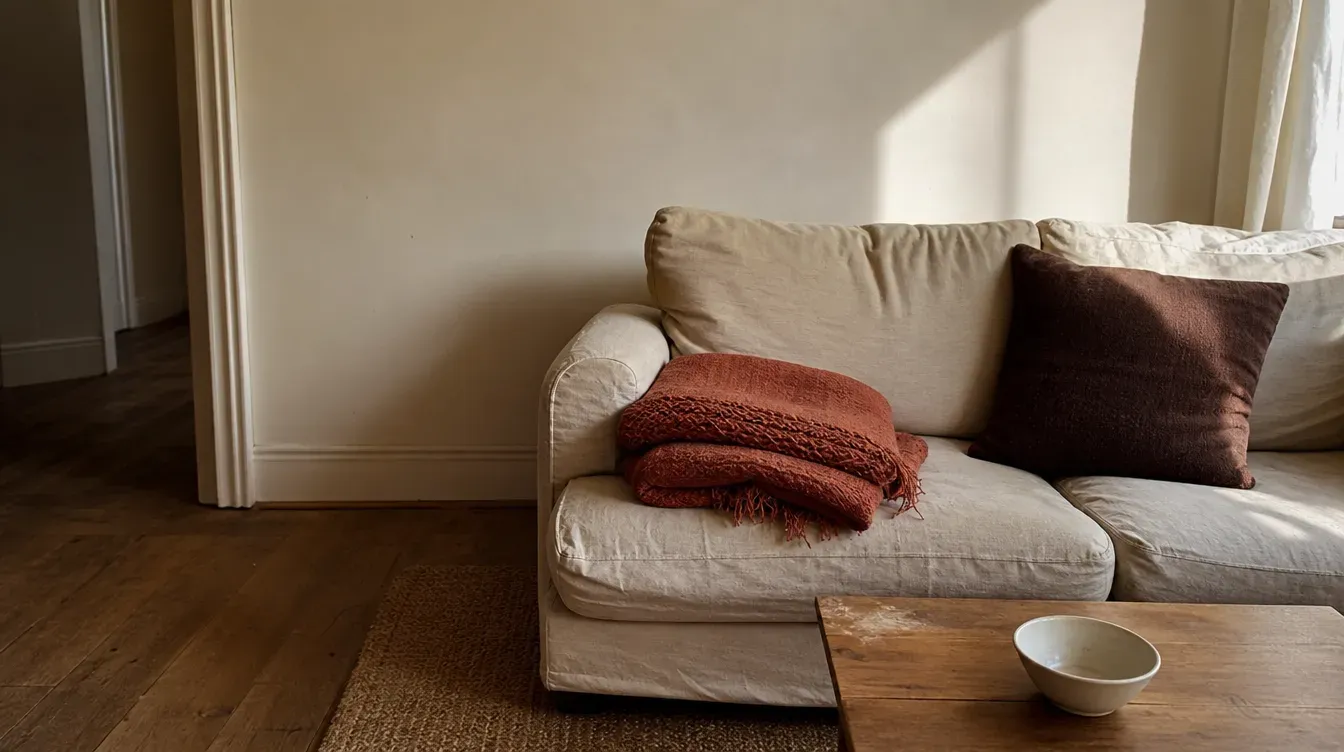
If the room only needs a small color change, try a removable accent before committing to paint. Our earlier warm-color room refresh starts there. Paint samples are a purchase to consider once you have a real shortlist, not an obligation to repaint.
Keep trend evidence separate from your decision
Houzz’s 2026 US emerging summer trends report found increased searches for colors including rust, chocolate brown, mushroom and sage. Its comparison covered US Houzz searches in January through March 2026 against the same months in 2025.
That is search interest on one platform, not sales, a representative consumer survey or evidence about Canadian homes. It may provide a color idea, but it cannot tell you which shade works beside your furniture or whether you will enjoy it after the season changes.
Use a trend name only to locate options. Record the manufacturer’s actual color name and code once you choose a sample; “sage” alone is not enough information to reorder the same product.
Read the sample label before preparing a board
Benjamin Moore suggests movable white boards for comparing colors. Its guidance recommends at least two coats for its liquid samples, which use an eggshell sheen and are not intended as durable finish coatings.
Those directions describe Benjamin Moore’s samples, not every paint. Read the label and technical instructions for the product in your hand. Compare requirements for a suitable surface, preparation, drying and recoating, rather than assuming another brand’s sample uses the same system.
If you already own a suitable board, use it; otherwise include that material in the purchase decision. Follow the sample maker’s directions for applying it to that surface. Do not guess at drying time or add a coating over paint that is not ready.
Work in the ventilation conditions the label requires, protect surrounding surfaces and keep paint and tools away from children and pets. This exercise does not require sanding or stripping any existing finish. If the available surface would require that work, use a suitable separate board instead.
Compare one location at a time
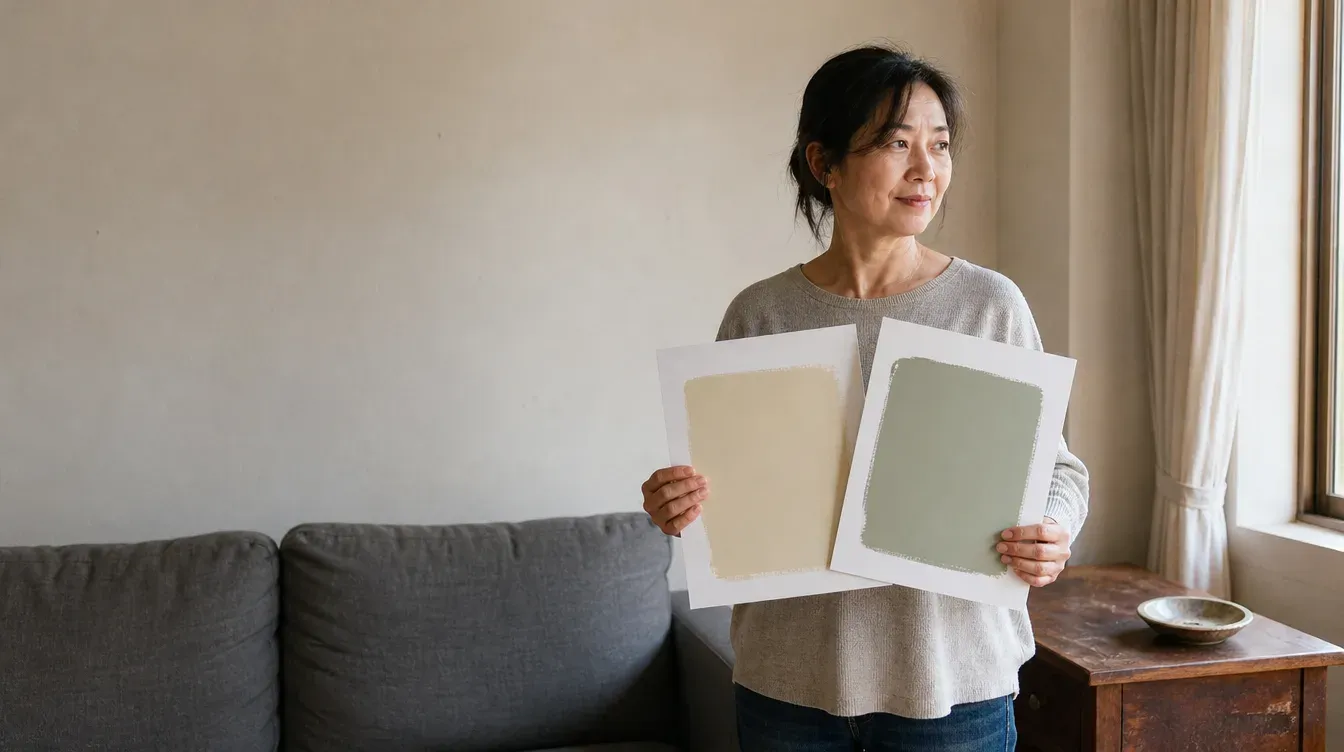
Label the back of each board with the color, brand, product and sheen. Keep the sample areas comparable so a tiny patch is not competing with a much larger one. Leave the boards separate and movable rather than making a permanent wall display.
Benjamin Moore advises looking at samples in daylight and artificial light. Place each dry board near the same fixed feature, then compare it at different times under the lighting you actually use. Do not change all your bulbs merely to make a favorite sample look acceptable.
Move the boards between a brighter and a dimmer part of the room. Keep their placement safe, without blocking walkways or putting them beside heaters. Do not attach them to a rental wall with an unapproved adhesive; a movable comparison need not risk the wall finish.
Use a blank worksheet, not a pretend result
Copy these headings into a notebook and fill them only after you look at your own samples. The entries below are prompts, not observations from a room we tested.
| Worksheet field | What to record |
|---|---|
| Sample identity | Brand, color name, code, sample product and sheen |
| Daylight view | Time, board location and what you notice beside fixed furnishings |
| Artificial-light view | Lamps used and any difference you notice |
| Finish decision | Intended wall product and sheen; questions still unanswered |
| Practical decision | Keep, reject or compare again, with your reason |
Use ordinary descriptions: “too yellow beside my curtain” is more useful than trying to give the color a technical diagnosis. If a sample looks different at night, record that rather than averaging the two impressions into a vague approval.
If you take reference photos, use them as reminders of placement and notes. Do not replace your direct comparison with a phone image, which is another screen-based view of the color.
Check the final product and permission before buying
An eggshell sample does not establish exactly how a different final sheen will look. Ask the paint supplier how to assess the specific finish paint and sheen you intend to use, particularly if either differs from the sample. Do not use Benjamin Moore’s sample coating as a shortcut to a finished wall.
Renters should obtain written permission before painting or otherwise changing a surface. Confirm any restoration requirement before buying paint. Comparing boards is useful even if permission is refused, but it does not override a lease or local requirements.
We have not verified US or Canadian paint prices. Check the local cost of samples, boards and the eventual finish separately, and do not treat sample purchases as guaranteed savings. Before checkout, keep only colors with completed notes and a clear next step: another comparison, a product question or an approved painting plan.
Sources checked October 15, 2026: Benjamin Moore, Tips on How to Sample Paint Colors; Houzz, 2026 U.S. Emerging Summer Trends Report.
Frequently asked questions
Should every liquid paint sample get two coats?
Benjamin Moore recommends at least two coats for its liquid color samples. That is product-specific guidance; compare the instructions on the sample you actually buy rather than applying the rule to every brand.
Can I use sample paint as the finished wall coating?
Benjamin Moore says its color samples are not durable finish coatings. Check the intended use of your own product and select an appropriate finish paint separately.
Does an eggshell sample show every final sheen accurately?
No. Benjamin Moore's liquid samples use eggshell sheen, while your chosen finish may differ. Ask how to assess the exact finish product and sheen before committing.
Can I test colors without painting my rental wall?
Movable sample boards let you compare colors without applying paint to the wall. Avoid unapproved attachments and obtain written permission before painting or otherwise altering a rental surface.