Plan a Visible Jeans Mend Before You Pick a Patch
 By Laura Jordana · Editor
Published Oct 19, 2026 · 4 min read
In this guide
The hole in your jeans and the patch you like are two separate decisions. First decide whether the garment is worth repairing and what kind of repair it needs; then choose how visible you want the result to be. This is a planning exercise, not a tested repair tutorial or a promise to restore the jeans’ strength.
Inspect more than the obvious hole
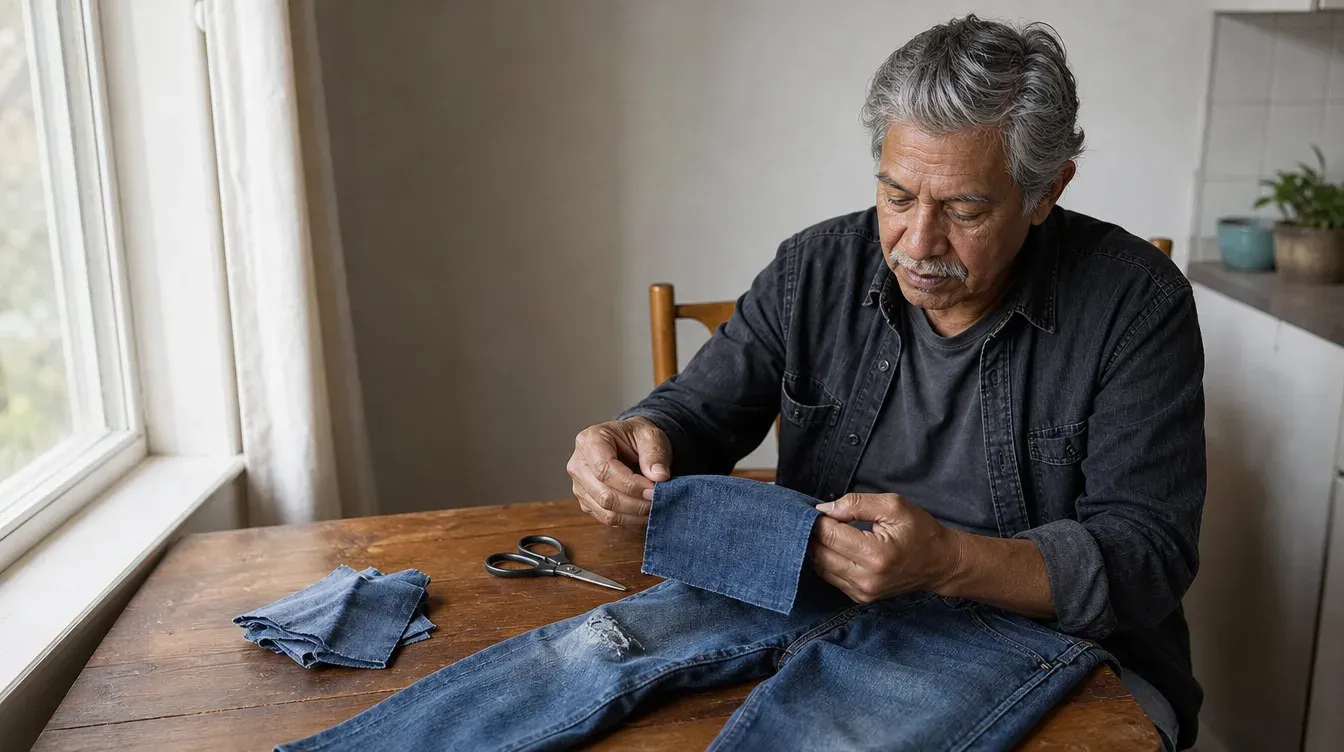
Lay the jeans flat in good light and inspect both sides of the worn area. Look at nearby seams, pockets and fabric that has become thin beyond the visible tear. Turn the garment inside out if that helps you see the construction.
New Mexico State University Extension’s clothing-reuse guide recommends sorting garments by the repairs they need and weighing the effort against their usefulness. A pair you wear regularly may deserve a repair assessment. A pair that never fit comfortably is not automatically worth a long project because you have a pretty scrap.
Do not pull hard on weakened fabric to test it. Note where the damage sits and whether movement puts pressure there. A worn knee, a failed crotch seam and a loose pocket each need a different assessment; this article does not provide structural repair instructions.
Choose repair, tailor or retirement
Use the table to decide your next step, not to diagnose fabric strength from a photograph. If you are unsure, show the jeans to someone experienced in garment repair before buying materials.
| What you find | Next step | Limit to keep in mind |
|---|---|---|
| Small worn area, surrounding fabric appears sound | Consider a modest repair plan within your skills | Appearance alone cannot confirm durability |
| Large tear, failed seam or damage in a high-stress area | Ask a tailor to assess repair options | A decorative cover is not a structural diagnosis |
| Widespread thinning, poor fit or little future use | Consider retiring the jeans from wear | Reuse only sound scraps if you have a real purpose for them |
Ask a tailor what they propose to repair, how the result may look and what it will cost before agreeing. We have not verified repair prices in USD or CAD. The planning process applies in both countries, but local quotes and services differ.
If these are protective work garments, do not use this styling exercise to judge whether they remain suitable for the job. Follow the garment maker’s requirements and your workplace’s safety rules.
Compare materials before colors
Put a possible patch beside the jeans and handle both fabrics. Compare weight, texture and care needs, as NMSU Extension advises for added fabric. Also consider stretch: a stiff patch on flexible denim may change how the area moves.
Read the jeans’ care label and any instructions supplied with the patch. A scrap with unknown fiber content or washing history brings uncertainty. If you cannot establish compatible care, keep it for a non-garment purpose rather than assuming that all blue fabrics behave alike.
Do not cut usable clothes to obtain the perfect color before you know what repair is needed. A sample from an existing scrap bag is enough for this comparison. The no-purchase version ends with a decision, not necessarily a finished pair of jeans.
Plan one visible detail
Choose whether you want the patch to blend in or stand out. A nearby blue can keep the contrast quiet; a clearly different color makes the repair more noticeable. These are proposed visual choices, not rules from a museum or claims about current fashion popularity.
The V&A distinguishes patchwork, which joins fabric pieces into a flat composition, from quilting, which stitches layers together. It also explains that patchwork has used remnants as well as fabric bought for the purpose. A patchwork reference does not automatically make a repair a reuse project, and it does not supply a strength rating.
For a first layout, place a paper shape over the jeans while they lie flat. Look at its position beside the pocket and seams, then remove it. Do not wear the jeans with pins, needles or loose temporary pieces attached. A visual mock-up helps you choose placement; it cannot tell you how the finished repair will move.
Pause before heat or stitching
NMSU Extension recommends reinforcing fusible patches with stitching. That is not permission to apply any iron-on patch to any pair of jeans. Follow the patch’s directions and the garment’s care label together; if their heat or care requirements conflict, choose a different approach.
Never iron clothing while it is being worn. Use an appropriate stable ironing surface, keep hot equipment away from children and pets, and let it cool safely. Do not improvise a temperature or pressing time from a general article.
For sewing, work with the garment off your body and keep track of pins and needles. Choose instruction suited to the actual fabric and repair, or have a tailor do the work. This plan deliberately stops short of specifying stitch spacing, patch dimensions or reinforcement for an area we cannot inspect.
Make the decision useful before spending
Write down the damaged location, the likely next step and what remains uncertain. If a tailor needs to inspect it, take the whole garment rather than only a close-up photo. Leave room to decide against the repair after hearing the options.
For jeans that still fit comfortably and are suitable to wear, consider whether they would work with an existing shirt before buying anything to accompany them. Our denim-shirt outfit exercise starts with owned clothing and movement checks. Keep any unfinished repair separate from your ready-to-wear clothes so it does not disappear back into the daily pile.
Sources checked October 15, 2026: V&A, An introduction to quilting and patchwork; New Mexico State University Extension, Rags to Riches.
Frequently asked questions
Will a decorative patch make torn jeans strong again?
Not necessarily. A patch can cover damage without restoring the surrounding fabric or seam strength. Have a tailor assess large tears, failed seams and damage in high-stress areas.
Can I use any fabric scrap as a patch?
No. Compare its weight, texture, stretch and care needs with the jeans. A decorative scrap that needs different washing or ironing may not be a useful match.
Are patchwork and quilting the same technique?
No. The V&A describes patchwork as joining pieces into a flat composition and quilting as stitching layers together. A simple jeans repair does not need to become a quilted project.
Is an iron-on patch enough on its own?
NMSU Extension recommends reinforcing fusible patches with stitching. Follow both the garment's care label and the patch instructions; if they conflict, do not use that patch, and do not assume stitching guarantees a durable repair.