One Scarf, Three Outfits: Start With What You Own
 By Laura Jordana · Editor
Published Oct 23, 2026 · 4 min read
In this guide
A scarf that stays folded in a drawer is a better starting point than another accessory order. Try it with three combinations you already wear, changing its position rather than buying clothes to match. The useful result is a repeatable outfit, not a scarf forced into every possible role.
Choose the scarf before the outfit
Lay out one scarf and check the edges, seams and fabric. Set aside anything with damage that catches when handled, and read the care label before pressing, washing or steaming it. A crease is not a reason to guess at the fabric’s heat tolerance.
Fold the scarf into a loose band and see how much length remains for a comfortable tie. A small square and a long rectangle will behave differently. Neither needs to do all three jobs below; the point is to find a use for the scarf you have, not justify a replacement.
New Mexico State University Extension’s guide to reusing clothes includes a scarf worn at the waist. Our neckline and bag ideas are editorial suggestions, not techniques attributed to that guide. Its broader advice to consider usefulness before restyling is a good filter: if the arrangement demands constant adjustment, skip it.
Put three familiar combinations on the bed
Choose outfits that fit and function without the scarf. Pants should stay in place on their own, and a bag should have an intact handle or strap. Leave shoes and jewelry unchanged for the first comparison so you can judge the scarf’s contribution.
| Position | Start with owned items | What to check |
|---|---|---|
| Neckline | Plain T-shirt, cardigan and jeans | Comfortable loose fit, no interference with the collar |
| Waist | Simple shirt and securely fitting trousers | Sitting comfort, short ends, no reliance on the scarf for support |
| Bag | Plain sweater, skirt and a bag with its own handle | Working closure, secure decorative tie, nothing dragging |
These are outfit proposals, not a shopping list. Substitute the pieces you actually wear: a dress can replace the shirt and trousers, and sneakers can stay with all three. Matching a color already in the scarf is an easy option, but an exact shade match is unnecessary.
Try the neckline without a complicated knot
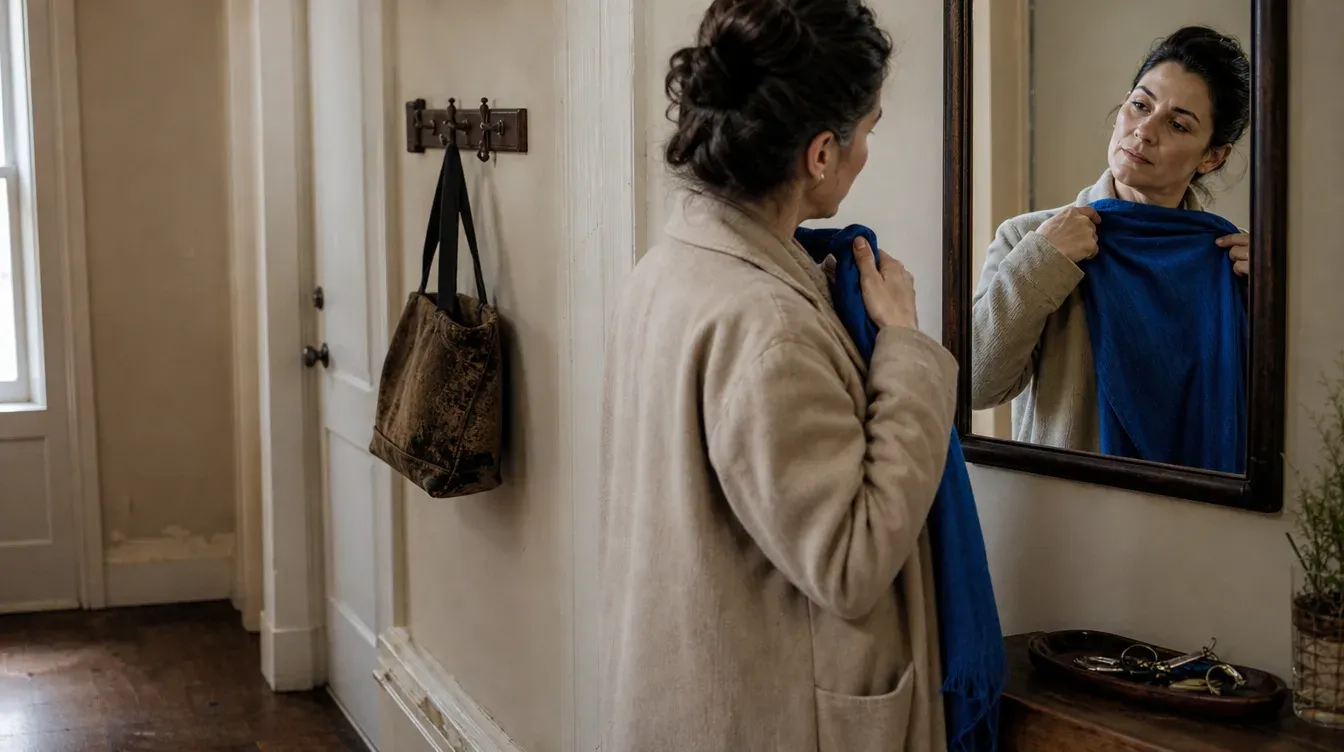
For our first suggestion, place the loosely folded scarf at an open neckline and tie it loosely if the length allows. Keep the cardigan or jacket open enough that the fabric does not bunch under the collar. If you dislike anything around your neck, move directly to the bag version.
Look at the scarf from conversational distance rather than studying the knot close up. Turn your head, reach forward and sit down. It should not press against your throat or restrict movement; remove it if it feels uncomfortable or catches on jewelry.
Loose ends and moving machinery do not mix. Remove the scarf before working around machinery or situations where it could catch, including cycling. Do not try to solve that problem with a tighter neck knot. An accessory is optional, and leaving it off is often the sensible version of the outfit.
Use the waist as a decorative placement
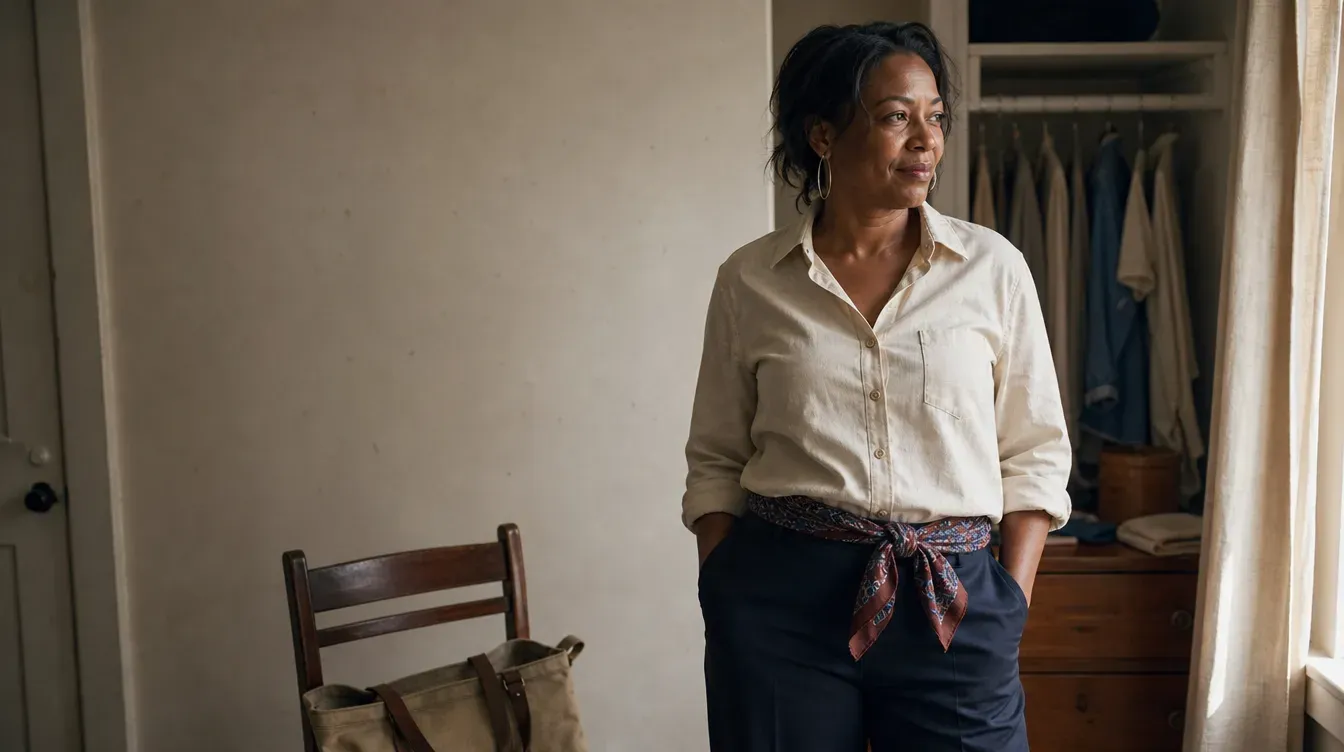
NMSU’s waist-accessory suggestion can give a familiar shirt-and-trouser combination a different focal point. Fold the scarf to the width that feels comfortable, then tie it loosely over a waistband that already fits. Keep the ends short enough that they will not snag during your normal activities.
Sit in a chair before deciding the arrangement works. Check whether the knot presses into your stomach, whether a shirt rides up or whether the scarf slides around. Move the knot, loosen it or abandon the placement rather than spending the day correcting it.
Do not force delicate fabric through rough belt loops or pull hard to compensate for loose trousers. The scarf is not a functional belt. If the clothing needs an alteration, that is a separate decision; extra tension on an accessory will not fix the fit.
Add it to a bag without changing the bag’s function
Our third suggestion is a decorative tie around an existing bag handle. Use a bag you already carry and keep its normal strap, closure and attachment points fully usable. The scarf must never become a load-bearing strap or a repair for broken hardware.
Position it away from the zipper path. Pick up the bag by its real handle, open it, put it down and check whether the ends brush the floor. Remove the scarf if it slips, catches or makes the bag awkward to use.
This is also an option when a fabric feels unpleasant against your skin, provided it is suitable for the bag and its care requirements. Avoid covering a damaged area just to hide it: inspect the actual handle before adding decoration.
Keep the version you would wear again
Try the strongest combination during an ordinary, safe indoor activity. Note what needs attention: a sliding tie, too much fabric or a print you prefer away from your face. These are proposed checks, not results from a test we performed.
Using owned items involves no new purchase. If none of the arrangements works, putting the scarf away is a valid outcome. If you later shop, identify the specific missing feature, such as a shorter length, and check the actual local price; we have not verified accessory prices in the US or Canada.
Care matters more than a styling trick. The FTC’s US care-label guidance covers the whole garment, including trim, and cautions that a listed method does not establish an unlisted method as safe. This is US guidance, not Canadian law. For either country, follow each item’s instructions and separate the scarf from the outfit for cleaning.
Sources checked October 15, 2026: NMSU Extension, Rags to Riches: Recycling and Upcycling Old Clothes; FTC, Clothes Captioning: Complying with the Care Labeling Rule.
Frequently asked questions
Does one scarf have to work in all three places?
No. Its length, fabric and condition may suit only one role. Skip any arrangement that needs a tight knot, pulls on the fabric or leaves troublesome ends.
Can a scarf replace a belt or bag strap?
Use it as decoration, not to hold up loose pants or carry the weight of a bag. The clothing and the bag need their own secure closures and straps.
Which scarf styling idea comes from the source?
New Mexico State University Extension suggests a scarf as a waist accessory. The neckline and bag arrangements here are our styling suggestions.
Can I wash the scarf with the outfit?
Only if the care instructions for each item allow the same method. Remove the scarf first, and do not treat an unlisted cleaning method as proven safe.