Botanical Print Outfits With Two Solid Pieces You Own
 By Laura Jordana · Editor
Published Oct 27, 2026 · 5 min read
In this guide
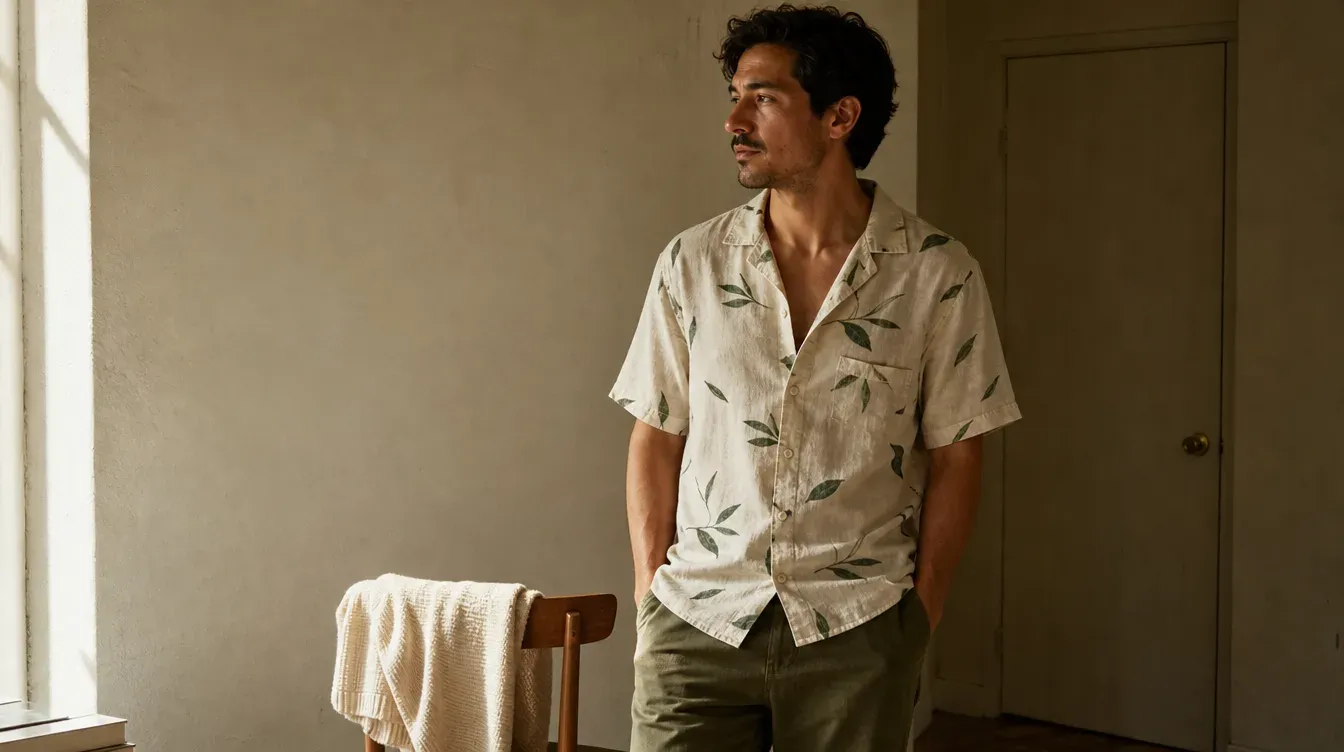
A leafy shirt does not require new trousers, new shoes and a bag in the same green. Pull out one botanical garment and two solid pieces you already wear, then compare the combinations before adding anything to a shopping cart. The print can do most of the visual work while the rest of the outfit stays familiar.
Start with a garment that already works
Choose a floral skirt, leaf-print shirt or another plant-patterned piece that fits comfortably now. Check closures, seams and any worn areas before planning around it. A print you love will not make an uncomfortable waistband or damaged fastening easier to wear.
Put the garment on without extra accessories. Sit, reach and walk in your normal shoes. Notice whether you like it as a whole garment, rather than just liking the fabric folded on a shelf. This is a suggested fitting exercise, not a test we have performed.
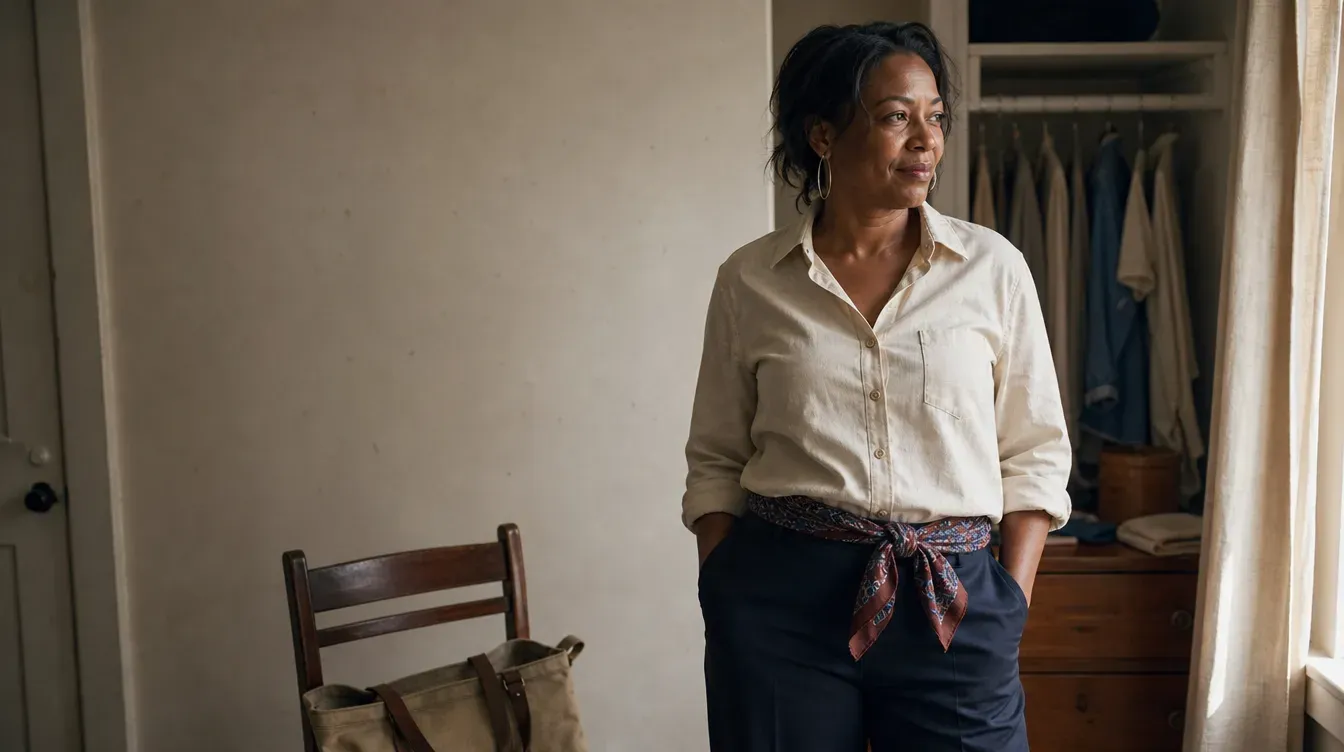
Next, choose two solid items that give you a genuine comparison. For a printed shirt, that might be dark trousers and a plain skirt. For a printed skirt, try a cream T-shirt and an existing dark sweater. You do not have to wear both solid pieces at once.
Look at the print before naming its style
The V&A’s history of William Morris’s wallpaper explores stylized plants and repeated patterns with different levels of density and complexity. It is historical design context, not evidence that a particular print is fashionable this season.
Applying wallpaper principles to clothing is our suggestion. Use the idea to inspect what is already on your garment: large or small motifs, closely packed or spaced apart, with a pale or dark background. That is more useful for this exercise than searching for a new trend name.
Look at the fabric both flat and while worn. Folds and seams change which parts of a pattern you see. A large flower might disappear beneath a jacket, while the shirt’s background becomes the color you notice most. Neither effect is wrong; it simply changes the combination you are choosing.
Give the solid pieces a clear role
Start by finding a color that is easy to repeat from your existing clothes. It can be the print’s background or a small detail. You are making a connection between pieces, not attempting a precise dye match.
| Starting garment | First solid option | Second solid option | What to compare |
|---|---|---|---|
| Leaf-print shirt | Dark trousers | Plain skirt | Which combination suits the day’s movement and footwear |
| Floral skirt | Cream T-shirt | Dark sweater | How the print looks beside a light or dark top |
| Botanical dress | Plain cardigan | Plain overshirt | How much of the pattern remains visible |
These are example combinations, not purchases to make. Substitute what is in your closet and what suits the weather. If you already have a denim shirt, the earlier three-way denim shirt plan offers another owned-piece starting point.
If neither solid color appeals to you, try one more owned option before deciding the print is difficult. There is no requirement to build a permanent capsule around every patterned garment. Sometimes you only want one reliable combination.
Compare scale without body-type rules
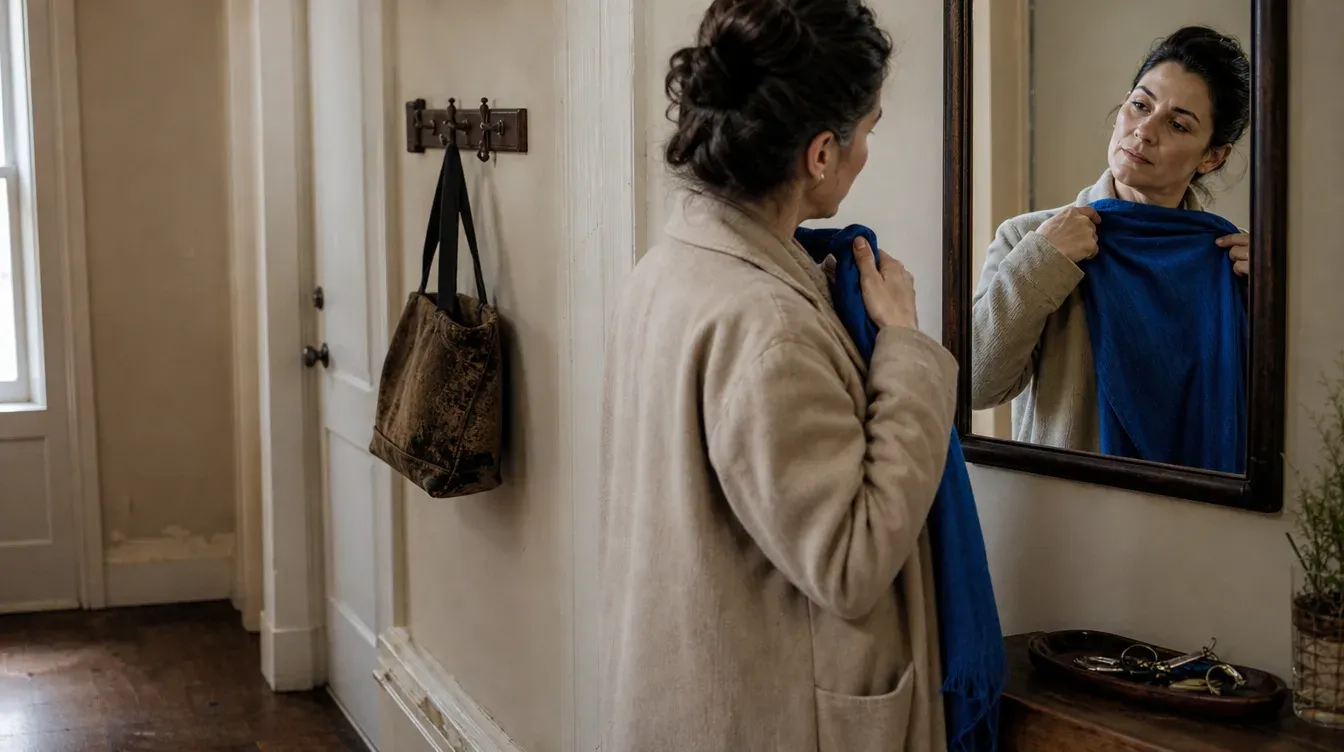
Stand far enough from the mirror to see the entire outfit. Then look more closely at the area where the print meets the plain fabric. Decide whether you prefer a clear block of pattern or only a small amount visible through a layer.
A large motif is not reserved for one body size, and a small motif is not a requirement for another. We are not using pattern to promise that a body will look taller, thinner or more proportional. Your comfort and visual preference are enough to make the choice.
If the combination feels busier than you want, remove an accessory or try a plain outer layer. If it feels too quiet, show more of the printed garment instead. Neither adjustment requires buying a more dramatic print or retiring the one you own.
Check the practical details before altering anything
Try the whole outfit with the bag and outerwear you use for the actual occasion. Check whether a collar bunches under a jacket, a hem catches when you walk or a sweater feels too warm indoors. A combination that only works while standing still is unfinished.
Read the care labels separately. Two pieces that look good together may need different cleaning methods. Do not wash them together just because their colors coordinate, and do not assume a printed fabric tolerates the same heat as a plain one.
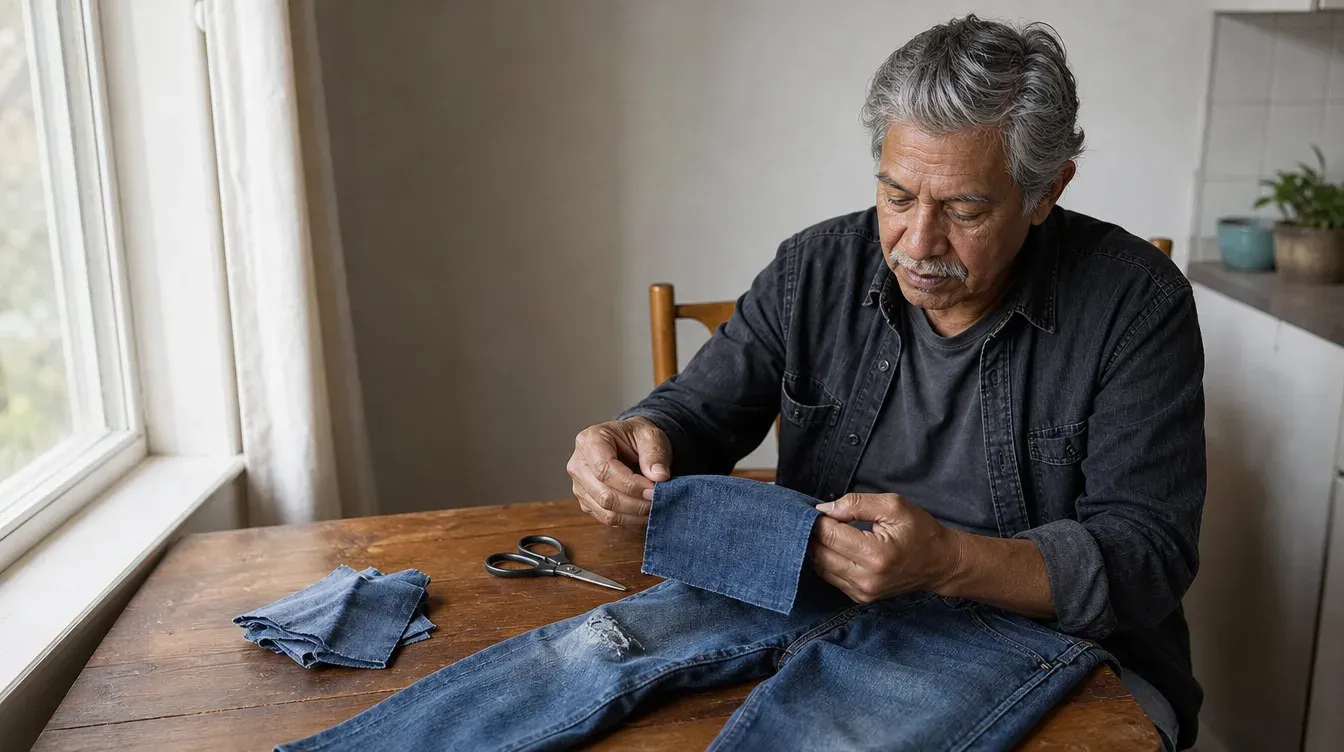
If you are considering adding botanical fabric as trim or a patch, pause before cutting. NMSU Extension advises checking weight, texture and care compatibility when combining fabrics. Its reuse guidance is not a guarantee that a decorative patch will repair a damaged garment structurally. Skip sewing or pressing work beyond your skills, and follow tool instructions if you proceed.
Save the combination, not a shopping wish list
Lay out your preferred outfit once more and note the specific pieces. A private photo can help you remember the combination, but it is optional; a short note such as “leaf shirt, dark trousers, existing sneakers” does the job without another app.
Using owned clothing needs no new purchase. The catch is availability: these examples cannot create a plain garment that is absent from your closet or fix clothing that no longer fits. Borrowing an appropriate piece with permission is another comparison option before shopping.
We have not verified prices in the US or Canada, and none of these combinations depends on a quoted deal. If you identify a real gap, write its fit and care requirements before checking local prices. Keep the printed garment available for a try-on so the purchase solves the actual problem rather than starting a second outfit you cannot finish.
Sources checked October 15, 2026: V&A, William Morris and wallpaper design; NMSU Extension, Rags to Riches: Recycling and Upcycling Old Clothes.
Frequently asked questions
Are botanical prints a current trend?
The historical V&A source used here does not establish a current fashion trend. This article offers styling suggestions for prints you own, not a claim about what is popular now.
Should I choose print size according to my body type?
There is no body-type rule in this plan. Compare prints for your own preference, garment fit, comfort and how much pattern you want to see.
Do the solid pieces need to match the print exactly?
No. Try a background color or one small color from the print, using pieces you already own. Keep the combination if you like it; an exact shade match is optional.
Can I add a botanical patch to a garment?
Treat that as a separate alteration, not a requirement for the outfit. Check fabric condition, weight, texture and care compatibility first; a decorative patch is not a promised structural repair.