How to Check Clothing Quality Before You Buy
 By Laura Jordana · Editor
Published Oct 10, 2026 · 4 min read
In this guide
A price tag tells you what something costs today. The inside of the garment tells you how long it will last. You can check most of it in two minutes in a fitting room, and a fair bit of it online if you know where to look.
Start with the label, because it’s required
In the US, the FTC's Textile rules require clothing labels to list generic fiber names (cotton, polyester, viscose and so on) with percentages by weight, from the largest share to the smallest. Fibers under 5% are usually listed as "other fiber," though wool is always named. Imported items must show the country where they were made, and the label carries either the company's name or an RN number. Care labels are required too, under a separate FTC rule.The label is the one thing on a garment that is regulated, so read it first. Match the fiber to the job: wool for warmth, linen for heat, and technical synthetics for swimwear and workout clothes. A “linen look” top that’s mostly polyester will not breathe like linen.
The inside-out test
Fashion educator Andrea Cheong, interviewed by NPR’s Life Kit, suggests checking whether the inside of a garment looks as tidy as the outside. That is a decent sign of overall quality. Turn the piece inside out and look for:
- Seams that hold. Gently pull on the seams joining two panels. They should not loosen or open into gaps.
- Even stitching. Lines should run straight, with stitches the same length. Wobbly lines or skipped stitches tend to unravel.
- Finished raw edges. Edges that are overlocked, bound or folded under fray less in the wash than bare cut edges.
- Loose threads. One or two is normal. A lot of them suggests rushed finishing.
Stitches per inch: how to check, not a magic number
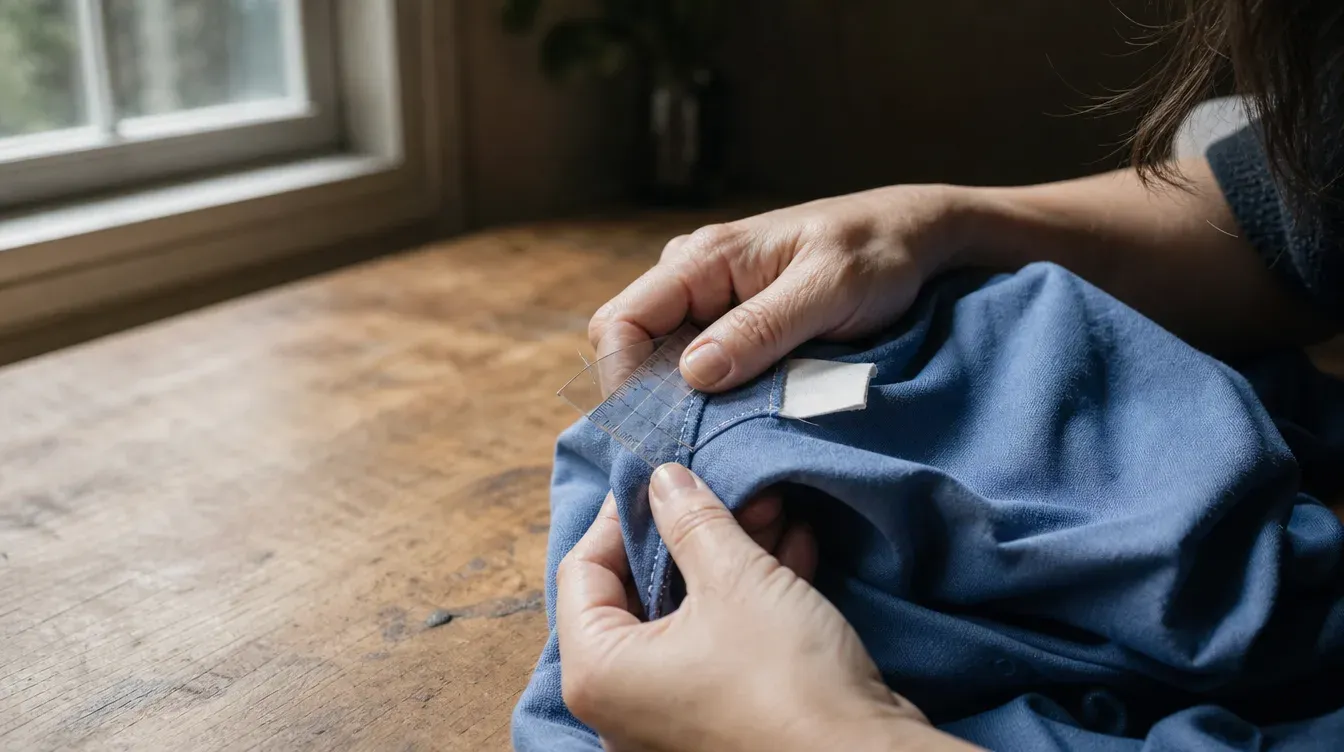
Stitch density is easy to check: lay a ruler along a seam and count the stitches in one inch. Shorter, denser stitches usually hold a seam together better than long, loose ones, and comparing two similar shirts this way quickly shows which was sewn with more care. We did not find a primary source that sets a standard number for everyday clothing, so use it as a comparison between garments rather than a pass mark.
Fabric and wear checks in the store
- Hold knits to the light. Thin, see-through jersey on a tee usually means it will lose shape or get holes sooner.
- Stretch and release. Pull a knit gently. It should spring back rather than stay baggy.
- Look for early wear. Cheong points to snags and early pilling or bubbling on the fabric, often from people trying things on, as a reason to put an item back.
- Check pattern and closures. Zippers should run smoothly and buttons should sit firmly with no hanging threads.
Delicate does not mean badly made. Silk, beading and embroidery may need hand-washing and still be well constructed, so decide if you’re willing to do that care before you buy.
Checking quality online
You can’t tug a seam through a screen, so lean on what the listing has to disclose:
- Find the fiber content and care instructions on the product page. If a listing doesn’t show them, ask before you buy or skip it.
- Zoom into photos of the inside, seams and hems when the retailer provides them.
- Read the return window and who pays return shipping. Our size guide for online fashion covers fit, and our Canada duties guide matters for cross-border orders, since duties are hard to get back on a return.
When the piece arrives, do the inside-out and seam tests right away, while you still have the tags on and the return clock is running.
Where this saves you money
Quality checks matter most on things you wear often: jeans, basics and outerwear. If you’re building a small wardrobe, pair this with our capsule wardrobe under $100 guide, and use it on resale too; see best resale apps for clothes.
Sources checked October 2026: FTC, Threading Your Way Through the Labeling Requirements Under the Textile and Wool Acts, Competition Bureau Canada, Guide to the Textile Labelling and Advertising Regulations, NPR Life Kit via APR, How to spot quality clothing.
Frequently asked questions
What does the fiber content label have to show?
In the US, the FTC's Textile rules require generic fiber names with percentages by weight, in order of predominance, plus the country of origin for imports and either the company name or an RN number. In Canada, fibre content goes in percentages by mass, in English and French, with the dealer's name and address or a CA number.
How do I test seams in a store?
Turn the garment inside out and give the seams a gentle tug. They should stay closed. If you can see gaps open between stitches or threads pulling loose, the seam is likely to fail early.
Are care labels required?
In the US, care labels on clothing are required under a separate FTC rule. In Canada, care labelling is voluntary, but the Competition Bureau says any care information provided must not be false or misleading.
Is delicate clothing poorly made?
No. Silk and pieces with beading or embroidery may need hand-washing and still be well made. Durability and quality are related but not the same thing.